 |
|
|
|
|
|
|
|
 |
|
||||||
 |
 |
 |
|
||||
 |
 |
 |
 |
 |
|
||
 |
|
||||||
 |
 |
|
|||||
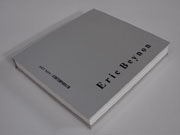
| Eric Beynon (Entre le 2ème et 3ème Millénaire après J.C.) |
Sur le plan de la peinture et d'elle seule; dépassé l'agaçante citation en usage aujourd'hui; il est peut-être possible d'interroger a nouveau les canevas des Genres légués par l'histoire; ceux ci ayant disparus depuis plus d'un siècle a la suite de l'effacement de leur hiérarchisation.
A la manière du Bernard l'Ermite, a l'intérieur de leur rhétorique spécifique et codifiée, la possibilité s'ouvre d'occuper cet espace en échappant a l'évolution génétique de l'Art moderne. Eric Beynon 1990 Eric Beynon est né à Genève en 1935; il suit des études d'Art à l'école des Beaux Arts et des Arts Décoratifs dans cette ville avant d'être invite en Allemagne, à l'académie des Beaux Arts de Karlsruhe pour suivre des cours de Erich Heckel (Brücke) et ensuite à la Folkwang Schule a Essen. Après un court séjour dans sa ville d'origine aux Nations Unis comme graphiste il gagna Paris ou il s'installe et restera environ 40 ans. Des son arrivé à Paris il expose avec les principaux artistes de ce moment dans les galeries Drouain; Fachetti et Stadler et obtient le prix Lissone en Italie (2eme prix, 1er prix Georges Matthieu) Construit des Assemblages de grande taille qui seront exposées rapidement à la Galerie Stadler et a la Galerie Bertha Schäfer New York ainsi qu'à la grande exposition du Maminy sur l'assemblage, ainsi qu'à Dallas et San Francisco. Pierre Restany le convainc d'exposer de nouvelles oeuvres proches du nouveau réalisme et rencontre Spoerri et Tinguely, ainsi que Niki de St.Phalle dont il organise avec Rauschenberg et Jasper Johns l'aspect technique de sa première exposition à la Galerie J.Expose brièvement dans cette Galerie. Contacté par Gérard Talabot, participe a Mythologie Quotidienne au Musée d 'Art Moderne Paris et expose des toiles photographiques peintes et et ensuite des oeuvres imprimées de grand format sur toiles vinyliques dont certains tirées en 50 exemplaires se sont dispersées par la suite sur le marche européen et dans certaines collections, la trace s'étant perdu depuis cette date, sauf une brève apparition en Italie. A partir de 1972 des photomontages destines a servir d'armature a un retour a la peinture. Ceux ci sont utilises jusqu'a aujourd'hui pour une peinture qui se veut a un retour aux Genres historiques. Au cour des années 70 après diverses activités pour le décor de théâtre (Médée: Xenakis - Lavelli - Rafaelli Roland Petit Casino de Paris, etc.) et l' architecture, recommence a exposer dans les cadres du Génie de la Bastille et dans les salons. Travail a Tanlay Bourgogne et Paris. Depuis 2003 vit et travail en Suisse dans le canton de Vaud Mythologies quotidienne Musée d'Art Moderne, Paris - Galerie Blumenthal-Monmaton exposition personnelle - Musée Rath, Geneve - Kunstforum Gorde Allemagne - Lunds Kunsthall Suède - S.Internationale dei Giovanni, Milan - Galerie Municipale, Montreuil - Superland, Lund Suède - Biennale de Lignano 68 - Galerie del centro arte moderna, I,ola - Galerie Due Torri et Galleria Trimarchi, Bologna Premio Suzzarra, etc. - Presse Opus international (G.Gassiot-Talabot) - Connaissance des Arts (Y Tallandier) - Le Monde (J.M.) - Revue Francaise de sociologie (Raymonde Moulin) - Art International (O.Hahn) - Beaux-Arts (J.J. Leveque) - Les Annales / etc. Livres: Dictionnaires divers dont: C.Argan (Italie) et A.Tronche (Ballant). Mai 2009 Expose dans son vaste "atelier-musée" sur invitation. Février - Juin 2011 Exposition personnelle au Musée Suisse de la Mode , Yverdon (Accompagné de modèle haute couture, 50-90) |
||


